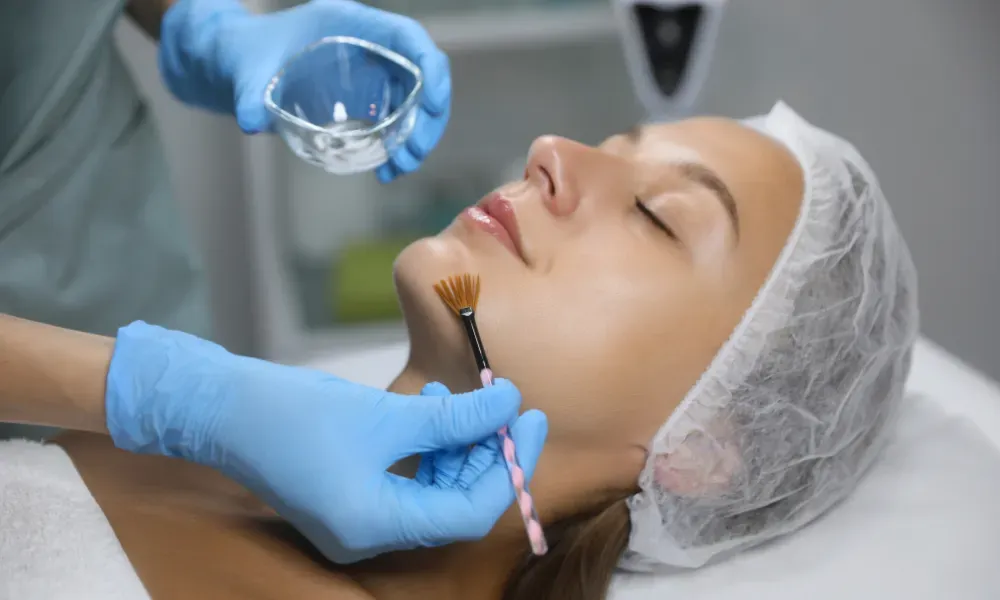
Chemical peel downtime depends on the treatment depth, skin type, and individual response. Learn how to plan your peel before a major event, what recovery may look like, and why scheduling early helps ensure your skin is ready
When you have a major event coming up, your skin may become part of the preparation checklist. Whether you're getting ready for a holiday party, wedding, vacation, family gathering, work event, or important photo session, you may want your complexion to look smoother, brighter, and more even.
A chemical peel can be an effective way to refresh the skin and address concerns such as dullness, uneven texture, acne, pigmentation, and certain signs of sun damage. But one of the biggest questions patients have before scheduling a peel is:
“How much downtime will I have?”
The answer depends largely on the type and depth of the chemical peel. Some superficial peels may cause little to no visible peeling, while stronger treatments can cause several days of redness, flaking, or peeling.
At MDCS Dermatology, chemical peels are customized according to your skin type, concerns, treatment goals, and upcoming schedule.
What Is a Chemical Peel?
A chemical peel is a professionally applied treatment that uses a carefully selected solution to exfoliate the outer layers of the skin.
As the treated skin sheds, newer skin is revealed, helping improve the appearance of:
- Dullness
- Uneven skin tone
- Rough texture
- Acne
- Clogged pores
- Certain types of pigmentation
- Fine lines
- Sun damage
- Post-acne discoloration
MDCS Dermatology offers a variety of medical-grade peel options, including salicylic acid, mandelic acid, glycolic acid, TCA, retinol, Jessner's, Glytone, and SkinMedica formulations.
The right peel isn't necessarily the strongest peel. It is the one that appropriately addresses your concerns while fitting your skin and your timeline.
Why Does the Type of Peel Matter for Downtime?
Not all chemical peels affect the skin at the same depth.
Generally, peels can range from superficial treatments with minimal recovery to deeper treatments that require more significant downtime.
Superficial Chemical Peels
Superficial peels affect the outermost layers of the skin and are often selected for concerns such as:
- Dullness
- Mild pigmentation
- Uneven tone
- Mild acne
- Rough texture
Downtime is typically minimal, although you may experience mild redness, dryness, or light flaking.
For someone preparing for an event, a superficial peel may be easier to incorporate into a busy schedule.
Medium-Depth Peels
Medium-depth peels penetrate further and may be used for concerns such as:
- More noticeable pigmentation
- Fine lines
- Sun damage
- Certain acne scars
- More significant texture concerns
These treatments may cause several days of redness and peeling.
Because the recovery can be more visible, they require more advance planning.
Deeper Peels
Deeper chemical peels involve more significant resurfacing and require substantially more recovery.
These treatments are not typically the choice for someone looking for a quick pre-event glow. A longer recovery period and appropriate medical supervision are important considerations.
How Far in Advance Should You Get a Chemical Peel?
There isn't one universal timeline for every peel, but the closer you get to an important event, the more conservative your treatment plan should generally be.
A useful planning guide is:
6–8 Weeks Before Your Event
This is a great time to schedule a consultation.
Your clinician can evaluate your skin and determine whether a peel is appropriate.
If you need a series of treatments, starting early gives you more flexibility.
3–4 Weeks Before
This may be an appropriate timeframe for certain superficial or customized peels, depending on your skin and treatment history.
You should still discuss the event date with your clinician.
1–2 Weeks Before
Timing becomes more important.
Some patients may have residual dryness or flaking after a peel, particularly if a stronger treatment is used.
If you're new to chemical peels, you may want to avoid scheduling your first treatment immediately before a major event.
Less Than One Week Before
This is generally not the time to experiment with a new or stronger chemical peel.
Even a treatment that is normally well tolerated can cause temporary redness, sensitivity, dryness, or peeling.
Your goal should be to arrive at your event with fully recovered skin—not skin that is still adjusting to a treatment.
Meet Beena Mahtani, DNP, FNP
Beena Mahtani, DNP, FNP is part of the clinical team at MDCS Dermatology.
For patients considering a chemical peel before a major event, Beena can evaluate the patient's skin concerns, discuss treatment goals, and help determine an appropriate approach based on skin type, sensitivity, and desired downtime.
A personalized assessment is especially important because a peel that works well for one patient may not be the right choice for another.
What Can a Chemical Peel Improve Before an Event?
Chemical peels can be customized to address a range of concerns.
Dull Skin
If your skin looks tired or lacks radiance, a superficial peel can help remove accumulated dead skin cells and refresh the complexion.
The result can be smoother-looking and more luminous skin.
Uneven Texture
Peels can help smooth rough surface texture and improve the overall feel and appearance of the skin.
This can be especially helpful before photographs, where uneven texture may become more noticeable.
Acne and Congestion
Certain peels, including salicylic acid formulations, may be useful for oily or acne-prone skin.
They can help address clogged pores and active breakouts as part of a broader acne treatment plan.
Pigmentation
Depending on the cause of discoloration, chemical peels may help improve the appearance of certain types of pigmentation, including some sun-related discoloration and post-acne marks.
However, pigmentation requires careful treatment selection. Patients with melasma or a history of post-inflammatory hyperpigmentation may need a particularly customized approach.
Fine Lines
Certain peels can improve the appearance of superficial fine lines by promoting exfoliation and skin renewal.
More significant wrinkles may require a different or combination approach.
What Does a Chemical Peel Feel Like?
The experience varies depending on the formulation and depth.
During treatment, you may experience:
- Tingling
- Warmth
- Mild stinging
- Tightness
A superficial peel may be relatively quick and well tolerated.
Stronger peels may create a more noticeable sensation during application.
At MDCS Dermatology, treatment selection is customized based on your skin and goals rather than using the same peel for everyone.
What Happens Immediately After a Chemical Peel?
Your skin may initially appear:
- Slightly red
- Warm
- Tight
- Dry
- More sensitive than usual
With some peels, peeling or flaking develops over the following days.
The amount of visible peeling does not necessarily indicate how effective the treatment was.
A treatment doesn't need to make your skin dramatically peel to be beneficial.
What Does Downtime Actually Look Like?
When patients hear “downtime,” they often imagine dramatic peeling.
That's not always the case.
Downtime can mean different things depending on the treatment.
Minimal Downtime
You may experience:
- Mild redness
- Dryness
- Slight flaking
- Temporary sensitivity
Moderate Downtime
You may experience:
- More noticeable peeling
- Redness
- Tightness
- Dryness
- Increased sensitivity
More Significant Downtime
Stronger peels can involve more substantial peeling and a longer recovery period.
This is why choosing the appropriate peel is more important than simply choosing the strongest treatment available.
Can You Wear Makeup After a Chemical Peel?
This depends on the specific treatment and your clinician's instructions.
If your skin is irritated, peeling, or particularly sensitive, applying makeup may not be comfortable and may interfere with the recovery process.
If you have an upcoming event, tell your clinician beforehand so your treatment can be selected and scheduled appropriately.
What Should You Do After a Chemical Peel?
Aftercare plays an important role in the recovery process.
Your personalized instructions may include:
Keep Your Skin Hydrated
Use a gentle moisturizer to support the skin barrier and minimize uncomfortable dryness.
Use Gentle Cleansing
Avoid aggressive scrubbing or exfoliation while your skin is recovering.
Don't Pick or Pull Peeling Skin
It can be tempting to remove flakes manually, but allowing the skin to shed naturally is important.
Protect Your Skin From the Sun
Post-peel skin can be more sensitive to UV exposure. Broad-spectrum sunscreen and appropriate sun protection are important after treatment.
Temporarily Avoid Irritating Products
Your clinician may recommend pausing retinoids, exfoliating acids, scrubs, or other potentially irritating products until your skin has recovered.
What Should You NOT Do Before Your Event?
If you're preparing for a major event, avoid making your skincare routine unnecessarily complicated.
In the days following your treatment:
- Don't pick peeling skin.
- Don't aggressively exfoliate.
- Don't introduce multiple new products.
- Don't intentionally tan.
- Don't skip sunscreen.
- Don't schedule another aggressive treatment without discussing timing with your clinician.
Your skin needs time to recover.
Should You Get a Chemical Peel for the First Time Right Before a Wedding?
It's generally better to avoid experimenting with a completely new treatment immediately before a major event.
Even if a particular peel has minimal downtime for many patients, individual responses vary.
If you're interested in a chemical peel for a wedding or other important occasion, schedule a consultation well in advance.
That gives your dermatologist or qualified clinician time to understand your skin and determine the most appropriate treatment.
What If You Have Sensitive Skin?
Sensitive skin doesn't necessarily mean you cannot have a chemical peel.
It does mean treatment selection needs to be more thoughtful.
Certain formulations, such as mandelic acid, may be appropriate for some patients with sensitive or pigmentation-prone skin.
Your clinician can consider:
- Skin sensitivity
- Skin tone
- Current skincare products
- Acne
- Pigmentation history
- Previous peel experience
- Upcoming sun exposure
The objective is controlled exfoliation without unnecessarily irritating the skin.
What If You Have Darker Skin?
Patients with deeper skin tones can potentially benefit from chemical peels, but treatment should be carefully individualized.
Pigmentation-prone skin may be more susceptible to post-inflammatory hyperpigmentation following irritation.
This makes appropriate peel selection, treatment settings, preparation, aftercare, and sun protection especially important.
A consultation allows your clinician to determine which treatment is appropriate for your skin rather than relying on a generic peel protocol.
Can Chemical Peels Be Used for Acne Before an Event?
They can be part of an acne treatment plan.
Salicylic acid peels, for example, may be useful for acne-prone or oily skin and clogged pores.
However, if you have an active flare, cystic acne, irritated skin, or another skin condition, your clinician may recommend addressing that first.
A chemical peel shouldn't automatically be viewed as a quick fix for a breakout immediately before an event.
Can a Chemical Peel Be Combined With Other Treatments?
Potentially, yes.
Chemical peels may be incorporated into a broader skincare or cosmetic treatment plan.
Depending on your concerns, other treatments might include:
- Microneedling
- RF microneedling
- IPL
- Laser treatments
- Botox®
- Dermal fillers
- Medical-grade skincare
However, the treatments need to be appropriately spaced.
Doing multiple procedures too close together can increase irritation and recovery time.
Your clinician can determine which treatments can safely be combined and how they should be scheduled.
Chemical Peel Timeline for Holiday Events
If you're preparing for a holiday event, here's a simple way to think about your schedule:
8+ Weeks Before
Plan.
Schedule your consultation and identify the concerns you want to address.
4–8 Weeks Before
Treat.
This can provide flexibility for appropriate superficial or customized peels and, when recommended, a series of treatments.
2–4 Weeks Before
Recover and assess.
Give your skin time to settle and determine whether any additional treatment is appropriate.
1 Week Before
Maintain.
Keep your skincare routine simple and avoid introducing aggressive new treatments.
Event Week
Protect.
Focus on hydration, gentle skincare, and sun protection.
What If Your Event Is Only a Few Days Away?
If your big event is right around the corner, resist the temptation to book the strongest peel available.
Instead, schedule a consultation and explain exactly when your event is.
Your clinician may recommend:
- Waiting until after the event
- Choosing a gentler treatment
- Adjusting the treatment strength
- Focusing on skincare instead
Sometimes the best pre-event treatment is the one that doesn't create unnecessary recovery.
Why Personalized Treatment Matters
Chemical peels are not one-size-fits-all treatments.
At MDCS Dermatology, peel selection can be based on your:
- Skin type
- Skin tone
- Sensitivity
- Acne history
- Pigmentation
- Texture concerns
- Treatment history
- Lifestyle
- Upcoming events
MDCS Dermatology offers multiple peel formulations, allowing treatment to be tailored to different concerns and desired downtime.
The goal isn't simply to make the skin peel.
The goal is to improve the skin safely and appropriately for you.
The Bottom Line
A chemical peel can be an excellent option before a big event when it's planned correctly.
Superficial peels may involve minimal downtime, while medium-depth and deeper treatments can require several days or longer for recovery.
If you have an upcoming holiday, wedding, vacation, or photo session, don't wait until the last minute. Schedule a consultation early enough to choose the appropriate peel and allow your skin to recover fully.
At MDCS Dermatology, Beena Mahtani, DNP, FNP and the MDCS Dermatology team can help create a personalized treatment plan based on your skin concerns and event timeline.
Ready to plan your treatment? Book Online.