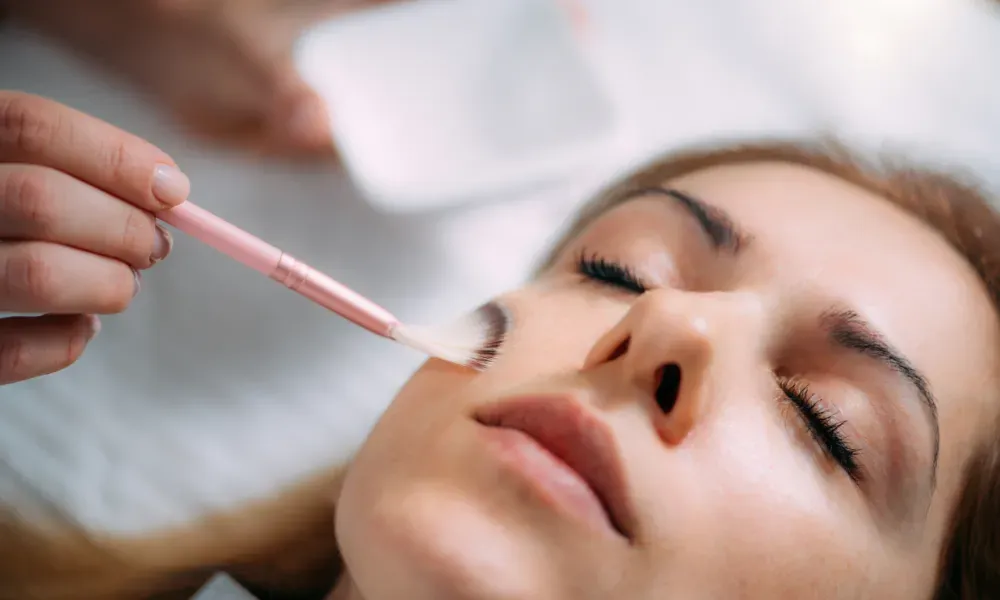
Mandelic acid peels offer gentle exfoliation to brighten dull skin, refine texture, improve clarity, and reduce the appearance of certain pigmentation. See how to schedule treatment before the holidays and what results and downtime to expect
The holiday season often brings more photos, parties, dinners, travel, and special occasions—which means many people want their skin to look especially fresh, smooth, and radiant.
If your complexion looks dull after a busy summer or you are dealing with uneven tone, mild pigmentation, congestion, or rough texture, a mandelic acid peel can be a gentle option for refreshing the skin before the holidays.
Unlike more aggressive resurfacing treatments, mandelic acid is known for its slower, more gradual penetration. This can make it an appealing option for patients who want exfoliation and brightening with relatively minimal irritation and downtime.
At MDCS Dermatology, chemical peels are customized according to your skin type, concerns, and treatment goals.
What Is a Mandelic Acid Peel?
Mandelic acid is an alpha hydroxy acid (AHA) derived from bitter almonds. Like other AHAs, it exfoliates the skin by loosening the bonds between dead skin cells, helping encourage the removal of dull surface cells.
What makes mandelic acid different is its relatively large molecular size. It penetrates the skin more slowly than some other AHAs, which can make it a gentler exfoliating option for certain patients.
A professional mandelic acid peel may help improve the appearance of:
-
Dullness
-
Uneven skin tone
-
Dark spots
-
Post-acne discoloration
-
Mild acne
-
Congested pores
-
Rough texture
-
Fine lines
-
Overall lack of radiance
MDCS Dermatology offers mandelic acid among its medical-grade chemical peel options, alongside glycolic, salicylic, TCA, retinol, Jessner's, Glytone, and SkinMedica formulations.
Why Choose Mandelic Acid Before the Holidays?
When preparing for a major event, the strongest treatment isn't necessarily the best treatment.
If you want to improve your complexion but don't want significant visible peeling or prolonged recovery, a mandelic acid peel may be worth discussing.
Its relatively gentle nature can make it useful for patients who want to address several superficial concerns at once.
The goal is a complexion that looks:
-
Brighter
-
Smoother
-
More even
-
Refreshed
-
Healthier
Rather than dramatically changing your appearance, a well-planned peel can help your existing skin look more polished.
What Can Mandelic Acid Peels Do for Your Skin?
1. Brighten a Dull Complexion
Dead skin cells accumulating on the surface can make the complexion look dull or lackluster.
By exfoliating these cells, mandelic acid can help reveal fresher-looking skin underneath.
This can be particularly appealing before holiday events when you want your skin to have a healthy-looking glow.
2. Improve Uneven Skin Tone
Sun exposure, acne, inflammation, and hormonal changes can all contribute to uneven pigmentation.
Mandelic acid may help improve the appearance of certain forms of discoloration and promote a more even-looking complexion.
However, not every type of pigmentation responds the same way. Melasma and other persistent pigmentation concerns require an individualized approach.
3. Refine Skin Texture
Mandelic acid exfoliates surface skin cells, which can help improve rough or uneven texture.
With a series of treatments, patients may notice that their skin feels smoother and looks more refined.
4. Help With Congestion and Breakouts
Mandelic acid can also be useful for patients with acne-prone or congested skin.
By encouraging exfoliation and helping remove accumulated dead skin cells, it can support clearer-looking pores and smoother skin.
5. Improve Overall Radiance
Sometimes your skin doesn't need a dramatic procedure—it simply needs a reset.
A mandelic acid peel can be incorporated into a broader skincare routine to help improve clarity and radiance.
Is Mandelic Acid Really Gentle?
Mandelic acid is generally considered one of the gentler AHAs because of its larger molecular structure and slower penetration.
That doesn't mean every mandelic acid peel is identical.
The concentration, formulation, application technique, and your individual skin all matter.
Professional peels can use higher concentrations than many at-home products, and stronger formulations should be administered by appropriately trained professionals. MDCS Dermatology notes that higher-strength mandelic acid peels should be professionally performed.
A professional treatment also allows the clinician to consider your skin type, sensitivity, pigmentation history, and other treatments you may be receiving.
Mandelic Acid vs. Glycolic Acid
Both are AHAs, but they behave differently.
Glycolic acid has a smaller molecular structure and generally penetrates more quickly.
Mandelic acid has a larger molecular structure and penetrates more slowly.
This slower penetration can make mandelic acid an attractive option for patients who are more sensitive to stronger exfoliation.
That doesn't mean mandelic acid is always better. It means the two acids may be appropriate for different skin types and treatment goals.
Mandelic Acid vs. Salicylic Acid
Salicylic acid is a beta hydroxy acid (BHA) and is particularly useful for oily, acne-prone, and congested skin.
Mandelic acid may be selected when the primary concerns include:
-
Dullness
-
Uneven tone
-
Mild pigmentation
-
Texture
-
Sensitive skin
-
Acne-prone skin
The appropriate peel depends on what your skin actually needs.
How Much Downtime Should You Expect?
One of the reasons mandelic acid can be attractive before the holidays is its generally mild recovery profile.
Some patients may experience:
-
Mild redness
-
Tightness
-
Dryness
-
Light flaking
-
Temporary sensitivity
Others may experience very little visible peeling.
Importantly, more peeling does not automatically mean better results.
Your skin does not need to dramatically shed in order for a peel to be effective.
The amount of exfoliation and recovery depends on the specific formulation, concentration, treatment protocol, and your skin.
When Should You Schedule a Mandelic Acid Peel Before the Holidays?
Timing is one of the most important parts of pre-holiday skin preparation.
6–8 Weeks Before Your Event
This is a great time to schedule a consultation.
If you need a series of treatments, beginning early gives your skin time to respond gradually.
3–4 Weeks Before
A mandelic acid peel may still fit comfortably into your schedule depending on your skin and treatment plan.
This can also provide enough time for mild dryness or flaking to resolve.
1–2 Weeks Before
A peel may still be appropriate for some patients, but your clinician should know about your upcoming event.
If you've never had a peel before, starting earlier is generally preferable.
Less Than One Week Before
Avoid experimenting with a new peel immediately before an important event.
Even a gentle treatment can cause unexpected redness, dryness, or sensitivity.
The goal is to have glowing, comfortable skin at your event—not skin that is still recovering.
Meet Tamila Deveny, Aesthetician
Tamila Deveny, Aesthetician is the Head Clinical Aesthetician at MDCS Dermatology.
Tamila has extensive experience with skin rejuvenation and aesthetic treatments, including chemical peels, microneedling, microdermabrasion, skin tightening, and acne treatments. She oversees aesthetic services across multiple MDCS Dermatology offices and has been recognized for her expertise in medical aesthetics.
For patients preparing their skin for the holidays, Tamila can help assess concerns such as dullness, uneven texture, congestion, and pigmentation and determine whether a mandelic acid peel or another aesthetic treatment is appropriate.
Her approach focuses on creating a customized skincare and treatment plan rather than applying the same protocol to every patient.
What Happens During a Mandelic Acid Peel?
A professional peel is typically a relatively quick treatment.
Your skin is first evaluated and prepared before the mandelic acid solution is applied.
You may experience a mild tingling, warmth, or stinging sensation during treatment.
The amount of time the peel remains on the skin depends on the specific formulation and your individualized treatment plan.
Afterward, you will receive instructions for caring for your skin during the recovery period.
What Should You Do After a Mandelic Acid Peel?
Your post-treatment instructions will be customized, but gentle skincare is generally important.
Keep Your Skin Hydrated
A gentle moisturizer can help support your skin barrier while the skin recovers.
Protect Your Skin From the Sun
Sun protection is particularly important after exfoliating treatments.
Use broad-spectrum sunscreen as directed and minimize unnecessary UV exposure.
Avoid Aggressive Exfoliation
Don't try to speed up the peeling process with scrubs, brushes, or additional exfoliating acids.
Don't Pick Flaking Skin
Allow the skin to shed naturally.
Picking can cause irritation and potentially contribute to discoloration.
Follow Your Customized Instructions
Your clinician may temporarily recommend avoiding certain retinoids, acids, or other active products.
Can Mandelic Acid Be Used on Sensitive Skin?
It can be an appropriate option for some patients with sensitive skin, but "gentle" doesn't mean universally risk-free.
Your skin may be more sensitive if you:
-
Have a compromised skin barrier
-
Recently experienced sunburn
-
Are using multiple active skincare ingredients
-
Have recently undergone another resurfacing treatment
-
Have active irritation
Your clinician should evaluate your skin before treatment.
What About Deeper Skin Tones?
Mandelic acid may be particularly appealing for patients with pigmentation-prone or deeper skin tones because its relatively gentle nature can reduce inflammation compared with some stronger exfoliating treatments.
However, every skin tone can react differently.
Proper treatment selection and aftercare remain important for reducing the risk of irritation and post-inflammatory pigmentation.
Can Mandelic Acid Help With Post-Acne Marks?
It may.
Acne can leave behind discoloration even after the active breakout has resolved.
Mandelic acid may help improve the appearance of post-inflammatory pigmentation while also supporting clearer-looking pores and smoother texture.
However, persistent acne and significant acne scarring may require additional treatments.
A comprehensive acne plan may include prescription medications, skincare, chemical peels, lasers, microneedling, or other procedures depending on the individual.
How Many Mandelic Acid Peels Will You Need?
Some patients may notice a brighter complexion after one treatment.
However, a series of treatments may provide more comprehensive improvement for concerns such as pigmentation, acne, and texture.
MDCS Dermatology notes that treatment frequency is individualized, with many patients receiving treatments spaced according to their skin goals and healing time.
Your treatment schedule may change depending on how your skin responds.
Can You Combine Mandelic Acid With Other Treatments?
Potentially.
Mandelic acid may be part of a larger aesthetic skincare plan.
Depending on your concerns, your treatment plan might include:
-
Medical-grade skincare
-
Microneedling
-
IPL
-
Laser treatments
-
RF microneedling
-
Acne treatments
-
Skin tightening procedures
The timing of combination treatments matters.
Your clinician can determine which procedures can safely be combined and how much recovery time should be allowed between treatments.
Is a Mandelic Acid Peel Good Before a Holiday Party?
For appropriately selected patients, it can be.
The appeal is that mandelic acid can provide exfoliation and brightening without necessarily requiring the more significant recovery associated with deeper resurfacing procedures.
It can be particularly useful if your goals are:
-
A brighter complexion
-
Smoother texture
-
More even-looking skin
-
Less congestion
-
Improved radiance
But don't wait until the day before your party.
Schedule your treatment early enough to allow your skin to settle.
Your Pre-Holiday Mandelic Acid Timeline
6–8 Weeks Before
Start planning.
Schedule a consultation and identify your primary skin concerns.
4–6 Weeks Before
Begin treatment.
If a series is recommended, this gives you time to complete treatments appropriately.
2–4 Weeks Before
Continue your plan.
Keep your skincare routine consistent and follow your post-peel instructions.
1–2 Weeks Before
Focus on recovery.
Prioritize hydration and sun protection.
Event Week
Keep things simple.
Avoid trying new aggressive products or procedures.
Who May Benefit From a Mandelic Acid Peel?
Mandelic acid may be worth considering if you want to address:
-
Dullness
-
Mild pigmentation
-
Uneven tone
-
Rough texture
-
Congested pores
-
Acne-prone skin
-
Post-acne discoloration
-
Overall lack of radiance
It may be especially appealing to patients who prefer a gradual, lower-irritation approach to exfoliation.
However, a consultation is the best way to determine whether it fits your skin.
When a Mandelic Acid Peel May Not Be the Right Choice
A chemical peel may need to be postponed or modified if you have:
-
Active skin irritation
-
Sunburn
-
A compromised skin barrier
-
Certain active infections
-
Recent aggressive resurfacing
-
Other contraindications identified during consultation
If you're prone to cold sores, tell your clinician before treatment. Chemical peels can potentially trigger an outbreak, and your clinician may recommend preventive antiviral medication when appropriate.
The Bottom Line
If you're looking for a gentle pre-holiday skin refresh, a mandelic acid peel may be a useful option for improving brightness, texture, clarity, and the appearance of certain pigmentation concerns.
Its slower penetration can make it an appealing choice for patients who want effective exfoliation with relatively minimal irritation and downtime.
The key is to plan ahead. Your skin needs time to respond and recover, and a series of treatments may be recommended depending on your goals.
At MDCS Dermatology, Tamila Deveny, Aesthetician and the aesthetic team can help develop a personalized treatment plan based on your skin, concerns, and holiday timeline.
Ready to prepare your skin for the holiday season? Book Online.