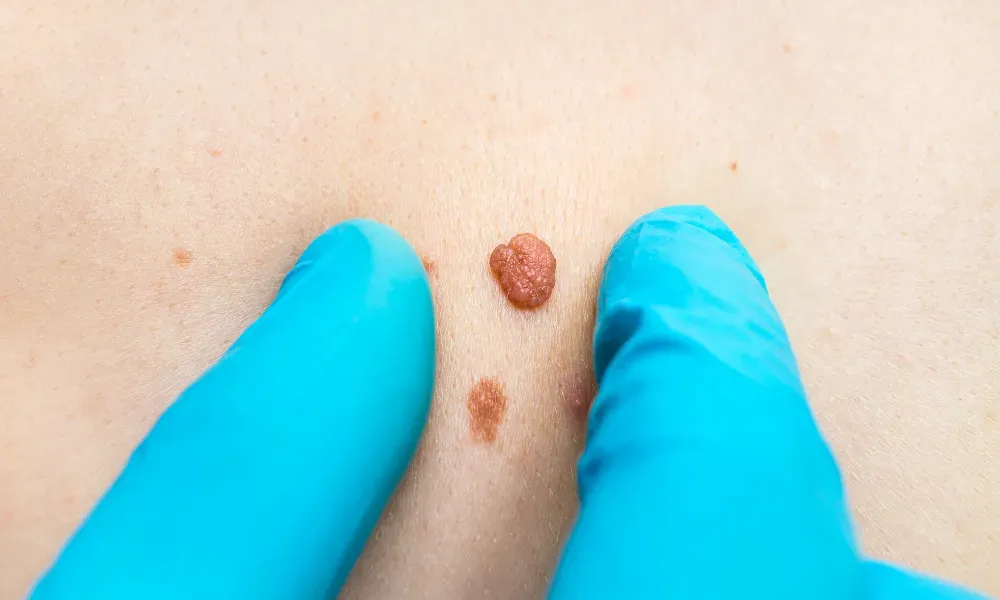
Skin tags and warts are common, but new, changing, painful, or bleeding growths should be examined. Learn when professional evaluation is important, how dermatologists distinguish these lesions, and which safe treatment options may be appropriate.
Skin tags and warts are two of the most common types of skin growths. They are often harmless, but because many different skin conditions can look similar, it is not always possible to determine what a growth is simply by looking at it yourself.
A new bump, changing growth, persistent lesion, or growth that bleeds or becomes painful deserves professional attention. A dermatology evaluation can confirm whether the lesion is a typical skin tag or wart and determine whether treatment or further evaluation is appropriate.
At MDCS Dermatology, skin tags and warts are evaluated and treated as part of comprehensive medical dermatology care at offices throughout New York and New Jersey. (mdcsnyc.com)
What Are Skin Tags?
Skin tags, medically known as acrochordons, are soft, benign growths made up of normal skin tissue. They commonly develop in areas where skin repeatedly rubs against skin, clothing, or jewelry.
Common locations include:
-
Neck
-
Underarms
-
Eyelids
-
Groin
-
Inner thighs
-
Under the breasts
-
Abdomen and skin folds
Skin tags are generally harmless and painless, although they can become irritated when they repeatedly rub against clothing or are caught while shaving. (mdcsnyc.com)
Why Do Skin Tags Develop?
There is not always one specific cause. Friction is thought to play an important role, and skin tags may be more common in people with certain genetic or hormonal factors.
They can also be associated with:
-
Areas of repeated skin friction
-
Weight fluctuations
-
Pregnancy and hormonal changes
-
Family history
-
Insulin resistance or diabetes
Having a skin tag does not automatically mean that a person has an underlying medical condition. However, multiple new growths may be worth discussing with a healthcare professional.
What Are Warts?
Unlike skin tags, warts are caused by certain strains of human papillomavirus (HPV). The virus infects the upper layers of the skin and can produce a rough or raised growth.
Warts can occur on many areas of the body, particularly:
-
Hands
-
Fingers
-
Feet
-
Knees
-
Face
-
Legs
Plantar warts develop on the soles of the feet and can sometimes become painful because of pressure while walking. (mdcsnyc.com)
Are Warts Contagious?
Yes. Because warts are caused by HPV, they can spread through direct contact or by touching contaminated surfaces.
Warts can also spread from one area of the body to another, particularly when they are picked or scratched.
To reduce transmission:
-
Avoid picking at warts
-
Keep them covered when appropriate
-
Do not share personal items such as razors
-
Avoid biting nails around wart-affected fingers
-
Wash hands regularly
Unlike warts, skin tags are not contagious. (mdcsnyc.com)
Skin Tag or Wart: How Can You Tell the Difference?
While some characteristics can provide clues, self-diagnosis is not always reliable.
Skin tags are typically:
-
Soft
-
Flesh-colored or slightly darker
-
Smooth
-
Attached by a narrow stalk
-
Found in areas of friction
Warts are more commonly:
-
Firm
-
Rough or textured
-
Raised
-
Irregular in appearance
-
Associated with HPV
Other growths, including moles and other benign or malignant lesions, can sometimes resemble these conditions. When there is uncertainty, having the lesion examined is the safest approach.
When Should a Dermatologist Examine a Skin Growth?
A dermatologist should evaluate a growth when you are unsure what it is or when it behaves differently from a typical, stable skin tag or wart.
Make an appointment if a growth:
-
Changes in size
-
Changes in color
-
Changes in shape
-
Starts bleeding
-
Becomes painful
-
Develops rapidly
-
Becomes persistently irritated
-
Looks significantly different from your other growths
-
Does not respond to expected treatment
-
Keeps returning
An evaluation does not necessarily mean that something is dangerous. It simply provides an opportunity to confirm the diagnosis and determine the safest next step.
Why You Shouldn't Automatically Assume a New Growth Is a Skin Tag
One of the most important reasons to have unfamiliar growths examined is that not every bump is a skin tag.
A dermatologist can distinguish a typical skin tag from other growths, including moles, seborrheic keratoses, cysts, warts, and lesions that may require additional evaluation.
This is particularly important when a growth is new, changing, bleeding, or otherwise unusual.
Can Skin Tags Be Removed?
Yes. Although skin tags do not generally require treatment for medical reasons, many patients choose removal because they are:
-
Irritated by clothing
-
Caught during shaving
-
Uncomfortable
-
Located in a noticeable area
-
Cosmetically bothersome
At MDCS Dermatology, treatment options may include snip excision, cryotherapy, or electrocautery, depending on the size, location, and characteristics of the growth. (mdcsnyc.com)
How Are Warts Treated?
Wart treatment depends on the location, size, number of lesions, and how long they have been present.
Treatment options may include:
Cryotherapy
Liquid nitrogen is used to freeze the wart. The treated tissue eventually heals and the wart may fall away.
Electrosurgery
Controlled electrical energy can be used to destroy certain warts.
Excision or Removal
For selected lesions, physical removal may be appropriate.
Prescription Topical Treatments
Certain warts may respond to topical medications designed to gradually destroy or stimulate an immune response against the wart tissue.
Treatment may require multiple sessions because warts can be persistent and may recur. (mdcsnyc.com)
Meet Melissa Swelim, FNP
Melissa Swelim, FNP is a certified Family Nurse Practitioner licensed in New York and New Jersey who provides dermatologic care at MDCS Dermatology. Her clinical experience includes management of warts, moles, acne, rosacea, eczema, psoriasis, skin cancer concerns, and acute and chronic wounds. (mdcsnyc.com)
With more than 14 years of clinical experience, Melissa takes a personalized approach to patient care and focuses on identifying the underlying factors contributing to dermatologic conditions. (mdcsnyc.com)
Should You Remove a Skin Tag or Wart at Home?
At-home removal is generally not recommended, particularly when you have not received a confirmed diagnosis.
Trying to cut, burn, freeze, or tie off an unknown growth can result in:
-
Bleeding
-
Infection
-
Scarring
-
Skin discoloration
-
Incomplete removal
-
Delayed diagnosis of another condition
A professional evaluation provides an opportunity to confirm what the lesion is before deciding how it should be treated.
What Happens During a Dermatology Evaluation?
A dermatology appointment generally begins with a visual examination of the growth and the surrounding skin.
Your clinician may consider:
-
Size
-
Color
-
Texture
-
Shape
-
Location
-
Duration
-
Whether it has changed
-
Whether it causes symptoms
If the appearance is unusual or the diagnosis is uncertain, additional testing may sometimes be recommended.
What Happens After Skin Tag Removal?
Most simple skin tag removal procedures are performed in the office and require little downtime. Depending on the technique used, patients may experience temporary redness, tenderness, or a small healing area.
Following aftercare instructions is important for minimizing irritation and supporting proper healing.
Sun protection may also be recommended once the area has healed to help reduce the chance of lingering discoloration.
What Happens After Wart Treatment?
Wart treatment can produce temporary redness, tenderness, swelling, or blistering depending on the technique used.
Because warts are caused by HPV and may recur, patients sometimes require additional treatments. Following treatment instructions and avoiding picking at the area can help reduce irritation and potential spread.
Can Skin Tags Come Back?
A removed skin tag does not typically grow back in exactly the same location. However, new skin tags can develop elsewhere.
If you notice multiple new growths, a dermatologic evaluation can help determine whether they are typical skin tags and whether any contributing factors should be addressed.
Can Warts Come Back?
Unfortunately, warts can recur even after successful treatment.
This is because treatment removes or destroys the visible wart, but HPV may remain in surrounding skin. Your dermatologist can recommend an appropriate treatment strategy if a wart returns or if multiple lesions develop.
Why Professional Evaluation Matters
The biggest benefit of seeing a dermatologist is not simply removal. It is making sure the growth is correctly identified first.
A lesion that appears harmless may require a completely different approach than a typical wart or skin tag. Professional evaluation helps avoid unnecessary treatment and provides an opportunity to identify concerning changes early.
When Should You Schedule an Appointment?
Consider scheduling a dermatology appointment if you have a skin growth that is:
-
New or unfamiliar
-
Changing
-
Bleeding
-
Painful
-
Increasing in size
-
Frequently irritated
-
Difficult to identify
-
Not improving with previous treatment
Even when a growth turns out to be completely benign, getting an accurate diagnosis can provide peace of mind.
Take the Next Step With MDCS Dermatology
Skin tags and warts are common and often harmless, but that does not mean every growth should automatically be treated or ignored. A professional evaluation can determine whether the lesion is a typical skin tag, wart, or another type of growth and help identify the most appropriate treatment.
At MDCS Dermatology, patients have access to comprehensive medical dermatology services, including evaluation and treatment of skin tags and warts. (mdcsnyc.com)
To schedule an evaluation with the team, Book Online.