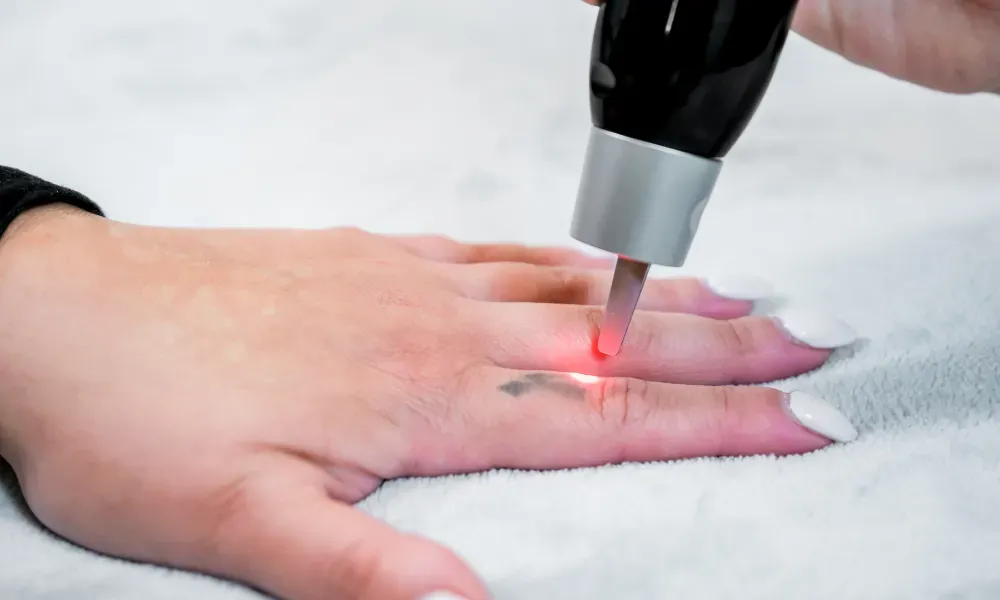
Starting tattoo removal before the holidays gives your skin and body time to progress through multiple treatments. Learn how laser removal works, why timing matters, and how early planning can help you move toward your tattoo removal goals
Tattoos can be meaningful for years—or sometimes they simply stop feeling right. A change in personal style, career, relationships, or priorities may lead you to consider fading or removing a tattoo.
If tattoo removal is on your list of goals, starting before the holidays can be a smart move. Laser tattoo removal is not a one-and-done treatment. Because the body needs time to clear fragmented ink between sessions, treatments are typically spaced weeks apart. Starting earlier gives you more opportunities to make progress before the new year.
At MDCS Dermatology, laser tattoo removal is performed with advanced laser technology and customized according to the tattoo, ink colors, skin type, location, and treatment goals.
Why Start Tattoo Removal Before the Holidays?
The biggest reason to begin early is time.
Laser tattoo removal works gradually. During treatment, laser energy targets tattoo pigment and breaks the ink into much smaller particles. Your body then naturally processes and clears those particles over time.
Because this process continues between appointments, sessions are intentionally spaced apart. MDCS Dermatology notes that tattoo removal treatments are commonly scheduled approximately 6–8 weeks apart, although the appropriate interval can vary by patient and treatment plan.
Starting before the holidays means you aren't expecting one treatment to accomplish everything.
Instead, you're beginning a process that can continue into the new year.
How Does Laser Tattoo Removal Work?
Modern laser tattoo removal uses highly concentrated pulses of light energy to target tattoo ink beneath the surface of the skin.
At MDCS Dermatology, the Spectra™ Q-Switched Nd:YAG laser is used for tattoo removal. Its dual wavelengths can target different tattoo pigments, making it suitable for a range of ink colors and skin types.
The laser energy breaks tattoo pigment into microscopic particles.
Your body then gradually clears these particles through its natural processes.
This is why results develop over time rather than immediately after the appointment.
Why Can't a Tattoo Be Removed in One Session?
Tattoo ink is deposited into the skin at different depths and in different concentrations.
A single treatment cannot safely remove all of the pigment at once.
There are also differences between tattoo colors and pigments. Some colors respond more readily to certain wavelengths than others.
Your skin also needs time to heal between treatments.
Trying to treat too aggressively or too frequently isn't necessarily better. A carefully spaced treatment plan allows the skin to recover while giving your body time to process the fragmented ink.
How Many Treatments Will You Need?
There is no guaranteed number of sessions for tattoo removal.
The total number depends on several factors, including:
-
Tattoo size
-
Ink colors
-
Ink density
-
Tattoo age
-
Depth of the ink
-
Location
-
Skin tone
-
Previous tattoo removal attempts
-
Individual response to treatment
Some tattoos may fade substantially after several sessions, while others require a longer treatment course.
During your consultation, your clinician can assess the tattoo and discuss realistic expectations.
Why November and December Can Be a Good Time to Start
If you're considering tattoo removal before the holidays, starting in late fall or early winter may provide several practical advantages.
Less Sun Exposure
Recent tanning and significant sun exposure can affect laser treatment planning.
When the skin is tanned, the laser may interact with natural skin pigment as well as tattoo pigment, potentially increasing the risk of unwanted skin reactions.
For many patients, cooler months provide an easier opportunity to limit sun exposure.
More Time Between Outdoor Activities
Summer often involves:
-
Beaches
-
Pools
-
Vacations
-
Outdoor sports
-
Extended time in direct sunlight
Beginning your treatment series during a period with fewer outdoor activities can make aftercare easier.
Time to Build a Treatment Series
Starting before the holidays means you can potentially complete one or more sessions before spring and summer activities return.
The goal isn't necessarily to have the tattoo completely removed by the holidays.
Instead, you're giving yourself a head start.
What Should You Expect After a Tattoo Removal Treatment?
The treated area can temporarily appear different after a session.
You may experience:
-
Redness
-
Swelling
-
Sensitivity
-
Temporary whitening of the treated area
-
Blistering or crusting in some cases
Your clinician will provide specific aftercare instructions based on your treatment.
The treated tattoo may not look dramatically different immediately.
That's normal.
The body needs time to process the fragmented pigment.
When Will You See Fading?
Tattoo fading is gradual.
You may notice changes in the weeks following treatment as your body clears ink particles.
Because treatments are spaced apart, the tattoo generally becomes progressively lighter over the course of the treatment series.
This is why starting before the holidays can be valuable even if your ultimate goal is complete removal.
Every appropriately timed session can be one step toward your larger goal.
What If You Only Want to Fade Your Tattoo?
Complete tattoo removal isn't the only reason people seek laser treatment.
Some patients want to significantly fade a tattoo rather than eliminate it completely.
Fading may be useful if you're considering:
-
A tattoo redesign
-
A cover-up
-
Reducing the intensity of an old tattoo
-
Removing only certain portions of a design
Your treatment plan can be tailored to your specific objective.
Can Multicolor Tattoos Be Treated?
Yes, but tattoo colors respond differently to laser wavelengths.
The Spectra laser at MDCS Dermatology uses dual wavelengths designed to address a variety of tattoo pigments, including black, blue, red, and other colors.
A consultation is important because the exact ink composition and color combination can influence treatment response.
What About Black Ink?
Black ink generally responds well to laser tattoo removal because it can absorb the appropriate laser wavelength effectively.
However, the depth, density, age, and amount of ink still matter.
A tattoo with heavy, densely packed black ink may require more sessions than a smaller tattoo with lighter ink.
What About Red, Blue, Green, or Other Colors?
Different pigments absorb different wavelengths.
This is why modern tattoo removal systems can use different wavelengths to target different colors.
Some colors may fade more quickly than others, while certain pigments can be more resistant.
Your clinician can assess the tattoo and explain what kind of response may be expected.
Is Tattoo Removal Safe for Darker Skin?
Laser tattoo removal can be performed on a broad range of skin tones, but treatment must be carefully customized.
Natural skin pigment can absorb laser energy, so appropriate wavelength selection and treatment settings are important.
The Spectra laser is designed to treat a broad range of skin types, including darker skin tones, when appropriately used by trained medical professionals.
A consultation allows your clinician to evaluate your skin and tattoo before selecting treatment parameters.
Why Sun Protection Matters Before Tattoo Removal
Sun exposure is one of the most important factors to consider when planning laser tattoo removal.
If your skin is recently tanned, treatment may need to be postponed until the skin returns to its normal baseline.
Recent sun exposure can increase the risk of:
-
Burns
-
Blistering
-
Pigment changes
-
Irritation
-
Delayed healing
-
Less predictable results
MDCS Dermatology recommends avoiding tanning and protecting the treatment area from excessive UV exposure before and after treatment.
Why Winter Can Make Aftercare Easier
After a tattoo removal session, protecting the treated area from excessive sun exposure is important.
Starting during the cooler months may make that easier.
Depending on the tattoo's location, you may be able to keep the area covered with clothing when outdoors.
Of course, UV exposure can still occur during winter, so sunscreen and other sun-protective measures remain important when the treated area is exposed.
What Should You Avoid Before Treatment?
Your clinician will provide individualized instructions, but patients are generally advised to avoid tanning and significant sun exposure before laser tattoo removal.
You should also tell your clinician about:
-
Recent sunburn
-
Recent tanning
-
Previous tattoo removal
-
Skin conditions affecting the tattoo
-
Medications
-
Previous scarring
-
Changes to the tattooed area
If the skin is sunburned, peeling, irritated, or otherwise compromised, treatment may need to be delayed.
What Should You Avoid After Treatment?
After laser tattoo removal, follow the specific instructions provided by your treatment team.
Depending on the treatment, you may be instructed to:
-
Keep the area clean
-
Protect it from the sun
-
Avoid picking or scratching
-
Avoid unnecessary irritation
-
Allow blisters or crusting to heal naturally
-
Avoid swimming or soaking the area until appropriate
Taking care of the treated skin is an important part of the process.
Can You Swim After Tattoo Removal?
You may need to temporarily avoid swimming, pools, hot tubs, or other activities that could irritate recently treated skin.
The appropriate timeframe depends on how the skin responds to treatment.
If you're planning a holiday vacation involving swimming, tell your clinician before scheduling your session.
This can help ensure your appointment fits your travel plans.
What If You're Traveling for the Holidays?
Travel can affect your tattoo removal schedule.
If you're planning a trip involving significant sun exposure, beaches, or outdoor activities, discuss it during your consultation.
You may need to plan your treatment around the trip rather than immediately before it.
A well-planned schedule can help minimize interruptions to your treatment series.
Meet Marisa K. Garshick, MD
Marisa K. Garshick, MD, FAAD is a board-certified dermatologist at MDCS Dermatology, serving patients in Manhattan and Englewood, NJ. She specializes in medical and cosmetic dermatology, including lasers and other cosmetic procedures.
For patients considering tattoo removal, Dr. Garshick can evaluate the tattoo, skin type, treatment history, and goals to help develop an individualized approach.
Her dermatologic expertise is particularly important when treatment needs to be customized around factors such as pigmentation, sun exposure, and skin healing.
Tattoo Removal Before a Holiday Event
If your goal is to have your tattoo less noticeable for an upcoming holiday event, it's important to set realistic expectations.
One treatment may begin the fading process, but significant improvement generally requires multiple sessions.
If you're planning for an event several months away, starting now gives you more time to make progress.
If the event is only a few weeks away, complete removal is unlikely to be realistic.
Instead, discuss your goals with your clinician and determine whether starting treatment now makes sense.
Tattoo Removal Before a New Year Goal
The new year often motivates people to make changes they've been putting off.
If removing an unwanted tattoo is one of your goals, you don't necessarily have to wait until January.
Beginning before the holidays can allow you to enter the new year already underway with your treatment plan.
Rather than making tattoo removal a January resolution, you can make your first appointment part of your end-of-year planning.
How to Plan Your Tattoo Removal Timeline
8–12+ Weeks Before the Holidays
Schedule a consultation.
Have your tattoo evaluated and discuss realistic expectations.
6–8 Weeks Before
Begin treatment if appropriate.
A first session can start the fading process.
4–6 Weeks Later
Allow your skin and body to recover.
Your clinician can determine when the next session should occur.
Throughout the Treatment Series
Protect your skin.
Avoid unnecessary UV exposure and follow your aftercare instructions.
Into the New Year
Continue the plan.
Additional sessions may be recommended depending on your tattoo and response.
Does Starting Earlier Guarantee Faster Removal?
No.
Starting earlier doesn't guarantee complete removal by a particular date.
Tattoo removal depends on factors that can't always be predicted precisely, including how your body clears pigment and how the tattoo responds to each treatment.
However, starting earlier does give you more opportunities to progress through an appropriate treatment series.
That's the real advantage.
Why a Dermatology-Based Approach Matters
Tattoo removal isn't simply about pointing a laser at ink.
Your clinician needs to consider:
-
Tattoo pigment
-
Skin pigmentation
-
Tattoo depth
-
Previous treatments
-
Scarring
-
Location
-
Sun exposure
-
Healing
-
Desired outcome
At MDCS Dermatology, tattoo removal is medically supervised and customized to the individual. The practice offers Spectra Q-Switched Nd:YAG laser technology for tattoo removal and treats a variety of tattoo colors and skin types.
If tattoo removal has been on your mind, starting before the holidays can help you get a head start on your goal.
Laser tattoo removal works gradually, and most tattoos require multiple treatments spaced several weeks apart. Starting earlier gives your skin time to recover between sessions and gives your body time to clear fragmented tattoo pigment.
Fall and winter can also make treatment planning easier because reduced sun exposure may simplify preparation and aftercare. However, sun protection remains important throughout the entire treatment process.
At MDCS Dermatology, Marisa K. Garshick, MD can evaluate your tattoo and help determine an appropriate treatment plan based on your skin, tattoo characteristics, and goals.
Ready to get started? Book Online.