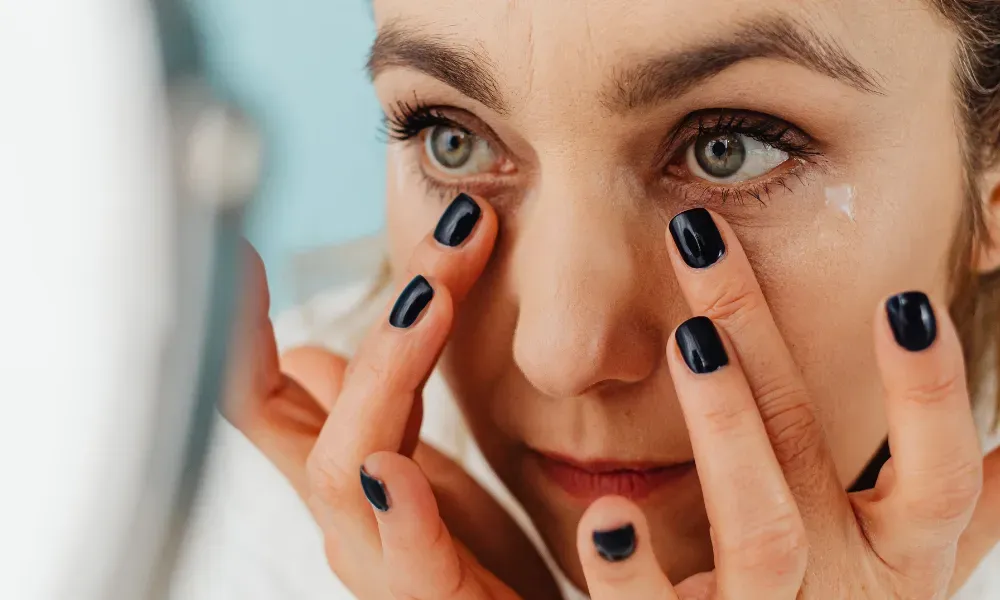
Under-eye shadows can result from tear trough hollowing, mid-face volume loss, pigmentation, or skin changes. Learn how tear trough filler and Voluma may help restore facial balance and why personalized treatment is essential for natural results
The eyes are often one of the first features people notice—and one of the first areas to show signs of fatigue, volume loss, and aging. Under-eye shadows can make you look tired even after a good night's sleep, while changes in the cheeks can contribute to a less supported appearance through the mid-face.
For some patients, addressing the under-eye area alone may not provide the most balanced result. The relationship between the tear trough, cheek, and mid-face is important when evaluating under-eye hollows.
Tear trough filler and mid-face filler, such as JUVÉDERM VOLUMA® XC, may be used strategically in appropriate patients to restore volume and improve facial proportions. At MDCS Dermatology, injectable treatments are customized according to facial anatomy, skin quality, existing volume, and each patient's aesthetic goals.
Why Do Under-Eye Shadows Develop?
Under-eye darkness and shadows can have several different causes. Not all under-eye concerns are caused by pigmentation, and not every patient needs filler.
Under-eye shadows may be influenced by:
-
Tear trough hollowing
-
Age-related volume loss
-
Mid-face volume loss
-
Genetics
-
Thin under-eye skin
-
Visible blood vessels
-
Hyperpigmentation
-
Facial anatomy
-
Skin laxity
-
A combination of several factors
For patients with true volume deficiency, strategically placed filler may help reduce the appearance of shadows by restoring lost support and creating a smoother transition between the lower eyelid and cheek.
What Is the Tear Trough?
The tear trough is the natural depression that runs from the inner corner of the lower eyelid toward the cheek.
When this area becomes more hollow, it can create a shadow that makes the eyes appear:
-
Tired
-
Sunken
-
Dark
-
Hollow
-
Older than they actually are
Tear trough anatomy varies considerably from person to person, which is why under-eye filler requires careful assessment.
Is Tear Trough Filler Right for Everyone?
No.
The under-eye area is highly delicate, and filler is not appropriate for every patient with dark circles.
If the primary concern is pigmentation rather than volume loss, filler may not address the underlying problem. Likewise, significant under-eye bags, fluid retention, skin laxity, or certain anatomical characteristics may make other treatments more appropriate.
A thorough consultation is essential before deciding whether tear trough filler is appropriate.
Why Treat the Mid-Face Instead of Only the Under-Eyes?
This is where facial balance becomes especially important.
The cheeks provide structural support beneath the lower eyelid. As the mid-face loses volume with age, the transition between the lower eyelid and cheek can become more noticeable.
Instead of focusing exclusively on the hollow itself, a comprehensive facial assessment may determine that restoring mid-face volume can improve the overall appearance of the under-eye region.
This approach can sometimes produce a more natural result than placing a large amount of filler directly beneath the eyes.
What Is JUVÉDERM VOLUMA® XC?
JUVÉDERM VOLUMA® XC is a hyaluronic acid dermal filler specifically designed for adding volume to the cheek area.
It may be used to:
-
Restore cheek volume
-
Enhance cheek contours
-
Improve mid-face proportions
-
Provide structural support
-
Create a smoother transition between facial areas
At MDCS Dermatology, dermal fillers are selected and placed according to the patient's facial anatomy and treatment goals.
Tear Trough Filler + Mid-Face Voluma: How Can They Work Together?
For appropriately selected patients, treating both areas may provide a more comprehensive approach to under-eye shadows.
Tear Trough Filler
Small amounts of filler may be strategically placed in the tear trough to address a true hollow or depression.
Mid-Face Voluma
Filler can be used to restore volume in the cheeks and improve structural support.
The Goal
Rather than simply “filling the dark circles,” the objective is to create a smoother, more balanced transition between the lower eyelid and cheek.
This is sometimes referred to as treating the whole facial structure rather than an isolated line or hollow.
The Importance of Conservative Treatment
More filler does not necessarily mean a better result.
The under-eye area is particularly unforgiving when overfilled. Excess product can create an unnatural appearance or contribute to swelling, puffiness, or contour irregularities.
A conservative approach can help preserve natural facial movement and proportions.
The goal should be to make the eyes look rested and refreshed, rather than obviously treated.
Meet Snehal Amin, MD, FAAD
Snehal Amin, MD, FAAD is a board-certified dermatologist and co-founder of MDCS Dermatology. He serves as the practice's Surgical Director and has extensive experience in dermatologic surgery, cosmetic dermatology, and advanced aesthetic treatments.
Dr. Amin's background includes advanced training in dermatologic surgery and cosmetic procedures, giving him a comprehensive understanding of facial anatomy and skin health.
For patients considering under-eye or mid-face filler, a detailed assessment of facial proportions and anatomy is essential to developing an appropriate treatment plan.
What Happens During a Filler Consultation?
A consultation should go beyond simply identifying where a patient sees a wrinkle or shadow.
Your clinician may evaluate:
-
Tear trough depth
-
Cheek volume
-
Mid-face proportions
-
Skin quality
-
Under-eye skin thickness
-
Existing filler
-
Facial symmetry
-
Lower eyelid anatomy
-
Degree of skin laxity
-
Overall facial balance
Your treatment goals are also important.
Some patients want subtle refreshment, while others are interested in more noticeable restoration of cheek volume.
What Does Tear Trough Filler Feel Like?
Dermal filler treatments are performed using a needle or cannula depending on the treatment area and the clinician's preferred technique.
A topical or local anesthetic may be used to improve comfort, and many hyaluronic acid fillers contain lidocaine.
Patients may experience temporary:
-
Tenderness
-
Swelling
-
Redness
-
Bruising
-
Mild sensitivity
The under-eye area can be particularly prone to swelling and bruising, which is another reason to plan treatment well before an important event.
How Soon Before the Holidays Should You Get Filler?
If you're considering tear trough or mid-face filler before holiday events, avoid scheduling the treatment immediately before a major party or photo session.
While some patients have minimal downtime, swelling and bruising can occur.
Several weeks before an important event is generally a more comfortable planning window.
Starting early gives the filler time to settle and allows your clinician to evaluate the result.
This is especially important if you're receiving filler for the first time.
What Can You Expect After Treatment?
Immediately after filler, the treated area may appear slightly swollen or more pronounced than the final result.
As swelling decreases, the filler integrates with the surrounding tissue and the appearance generally becomes more subtle.
Your clinician will provide specific aftercare instructions based on the areas treated and the products used.
How Long Does Voluma Last?
The longevity of dermal filler varies depending on:
-
Product used
-
Treatment area
-
Amount injected
-
Individual metabolism
-
Facial movement
-
Lifestyle
-
Treatment technique
JUVÉDERM VOLUMA® XC is designed to provide long-lasting cheek augmentation, although individual results vary and maintenance may eventually be recommended.
Can Filler Completely Remove Under-Eye Darkness?
Not always.
This is an important distinction.
If darkness is primarily caused by:
-
Pigmentation
-
Thin skin
-
Visible blood vessels
-
Structural shadowing
-
Fluid retention
filler may not completely resolve the concern.
A patient may need a combination approach that could include skincare, laser or light-based treatments, or other procedures.
A comprehensive consultation can help determine what is actually causing the appearance of dark circles.
Filler Isn't Always the Best Option for Under-Eye Bags
Some patients have prominent fat pads or lower eyelid bags rather than simple hollowness.
In these cases, adding filler may not produce the desired result and could potentially make puffiness more noticeable.
The right treatment depends on anatomy.
This is why an experienced injector should evaluate the entire lower eyelid and mid-face rather than treating every under-eye concern with filler.
What Makes the Under-Eye Area Different?
The skin beneath the eyes is thinner and more delicate than many other areas of the face.
It also contains important blood vessels and structures that require careful consideration during injectable treatment.
For these reasons, tear trough filler should be approached conservatively and performed by an appropriately trained medical professional.
Can You Combine Tear Trough and Cheek Filler With Other Treatments?
Potentially, yes.
Depending on your goals, a comprehensive cosmetic plan might include:
-
Neuromodulators for dynamic wrinkles
-
Fillers for facial volume
-
Skin resurfacing
-
Laser treatments
-
Medical-grade skincare
-
Treatments for pigmentation
However, treatments should be strategically planned rather than performed simply because multiple procedures are available.
The best plan addresses the factors actually contributing to your concerns.
Holiday Skin Prep: Start Early
If you're preparing for holiday parties, family photos, weddings, or other special events, waiting until the last minute can limit your options.
A better strategy is to begin several weeks or months ahead.
8–12 Weeks Before
Schedule a consultation and determine whether you would benefit from:
-
Mid-face volume restoration
-
Tear trough correction
-
Skin resurfacing
-
Pigmentation treatment
-
A customized skincare program
4–8 Weeks Before
Depending on your treatment plan, this may be an appropriate window for injectable treatments or skin procedures that require some recovery time.
2–4 Weeks Before
This can provide a comfortable window for treatments that need time to settle before photos or events.
The Week Before
Focus on maintaining your routine rather than experimenting with new aggressive treatments.
Avoid scheduling unfamiliar procedures immediately before a major celebration.
How to Maintain Your Results
Healthy skin habits can complement injectable treatments.
Consider:
-
Wearing broad-spectrum sunscreen daily
-
Using sunglasses to protect the eye area from UV exposure
-
Maintaining adequate hydration
-
Following your recommended skincare routine
-
Avoiding unnecessary skin irritation
-
Keeping regular follow-up appointments
Remember that fillers address specific structural concerns; they do not replace healthy skincare or sun protection.
Frequently Asked Questions
Is tear trough filler the same as cheek filler?
No. Tear trough filler is designed to address a hollow beneath the lower eyelid, while cheek filler such as JUVÉDERM VOLUMA® XC is used to restore or enhance mid-face volume.
Why might someone need both?
For some patients, under-eye shadows are influenced by both tear trough hollowing and mid-face volume loss. Addressing both areas may create a more balanced transition between the lower eyelid and cheek.
Will filler make me look puffy?
The risk of puffiness depends on your anatomy, product selection, placement, and amount used. Careful patient selection and conservative treatment are particularly important around the eyes.
How long before a holiday event should I get filler?
Planning several weeks ahead is generally preferable to scheduling filler immediately before an event. This allows time for swelling or bruising to resolve and the treatment to settle.
Is filler appropriate for everyone with dark circles?
No. Dark circles can result from pigmentation, vascular changes, thin skin, shadows, or volume loss. Filler primarily addresses volume-related concerns.
The Bottom Line: Treat the Cause, Not Just the Shadow
Under-eye shadows can be complex. Sometimes the problem is a hollow tear trough. Sometimes it's mid-face volume loss. Sometimes it's pigmentation or skin quality. And in many cases, several factors contribute at the same time.
That's why the most effective approach begins with understanding why the under-eye area looks tired in the first place.
For appropriately selected patients, combining conservative tear trough filler with mid-face volume restoration using a product such as JUVÉDERM VOLUMA® XC can help create a smoother, more supported appearance.
At MDCS Dermatology, treatment plans are individualized around facial anatomy, skin health, and aesthetic goals.
To schedule a consultation with Snehal Amin, MD, FAAD or another member of the MDCS Dermatology team, Book Online.